
Shopify stores designed and launched
A careful ServiceM8 and Shopify build
Shopify ServiceM8 Integration, Set Up Once and Checked Properly
A Shopify ServiceM8 integration has no first-party connector in our research. Zapier can create a ServiceM8 job when a Shopify order arrives, and the link is mainly one-way. Zoho Flow, Workato and MindCloud add job and client triggers. Writing updates back to Shopify needs custom work. We map, test and hand over, from $390.
- Order to client and job mapping
- Job status triggers chosen
- Write-back to Shopify scoped if needed
- Test log and a recorded handover
From$390
Delivery3 to 14 working days
Revisions2 rounds

Our track record
450+ Shopify Stores, 4.9+ From Verified Clients. Your ServiceM8 Setup Is Handled by the Same Team.
Verified clients rate us 4.9+. Your ServiceM8 build gets the same discipline as a full store build: a clear written scope, a duplicate to test in and a record of what was checked.
Average rating from verified clients
Building Shopify stores since
Secure checkout
Pay through a protected checkout and keep a full order record.
Two revision rounds
Included in every package, so the result matches what you pictured.
Backup before changes
We work on a duplicate of your theme, never on your live store.
Who this is for
Six Situations Where Shopify ServiceM8 Integration Pays Off
Trades that sell online need an order to become a booked job. These are the cases we build for.
You are a good fit if
- You sell on Shopify today or soon
- You will own the ServiceM8 account
- You prefer a quote to an hourly meter
- You can approve a test within a few days
Trades selling products and callouts
A paid order can create a job in ServiceM8.
Teams keeping clients clean
Orders create or match a ServiceM8 client.
Teams wanting status back
Job updates can trigger messages, but writing back to Shopify is custom.
Teams on Zoho Flow or Workato
Both list job and client triggers.
Dispatchers needing details
Order notes and addresses give the job what it needs.
Teams expecting two-way sync
Zapier describes the link as mainly one-way.
Problems solved
Shopify ServiceM8 Integration: Six Faults We Fix First
Job automations fail on clients and direction. These are the six faults we fix.
The problem
Duplicate clients
The outcome
A repeat buyer becomes two clients. We match on phone and email.
The problem
Job fields empty
The outcome
Dispatch lacks the address or notes. We map them.
The problem
Duplicate jobs
The outcome
A retry books twice. We check first.
The problem
One-way assumption
The outcome
Status never returns to the store. We scope write-back.
The problem
Status not used
The outcome
Customers are not told. We trigger a message on job update.
The problem
No handover
The outcome
Setup is unwritten, so the next change starts from guesswork. We write down the triggers, fields and tests.
What we can do
Six Parts of a Reliable ServiceM8 and Shopify Connection
How we connect ServiceM8 and Shopify, in order.
Connect
Accounts.
Clients
Match.
Map
Job fields.
Status
Triggers.
Test
Real order.
Handover
Notes and recording.
What is included
The ServiceM8 Integration Checklist, Group by Group
Deliverables fall into six groups. The package table further down shows how much of each group a given price covers, so the gap between packages is easy to judge.
Connection
- Health check on a schedule
- A live read proves the link first
- Roles and permissions reviewed with you
- ServiceM8 connected using an API key or an OAuth sign-in
Triggers
- Order of events checked
- Triggers tested one at a time
- Event handled: an installation order is paid
- Filtering on tags, countries and totals
Mapping
- Mapping for customer name
- Custom fields added to the map
- Address and job type mapped and formatted
- Field map written into the notes
Safety
- Silent failures found by a daily check
- Alerting on failed runs
- Opt-outs travel with the data
- We stay inside rate limits
Testing
- Check against an installation order
- Test on a cancelled job
- Test on a rescheduled visit
- Edge cases: refunds and edits
Handover
- Account kept in your name
- Questions answered after launch
- Picture of what moves where
- Notes covering each setting
Your part is access, a short brief and a ruling on conflicts. Ours is the build, the test and the handover.
See how the data moves
How We Wire ServiceM8 to Your Store, Step by Step
An integration is simplest to judge when you can see it. The picture shows the pieces we build for ServiceM8: the records on each side, the status of every link and the log a person can read.
Portfolio
Our Store Work Behind Your ServiceM8 Integration
Integrations sit behind the storefront, so here is the storefront we build. Imagine each store below with jobs flowing into ServiceM8.

Fitness Recovery Dropshipping Store
Fitness recovery
Luxury Fashion Editorial Shopify Store
Luxury fashion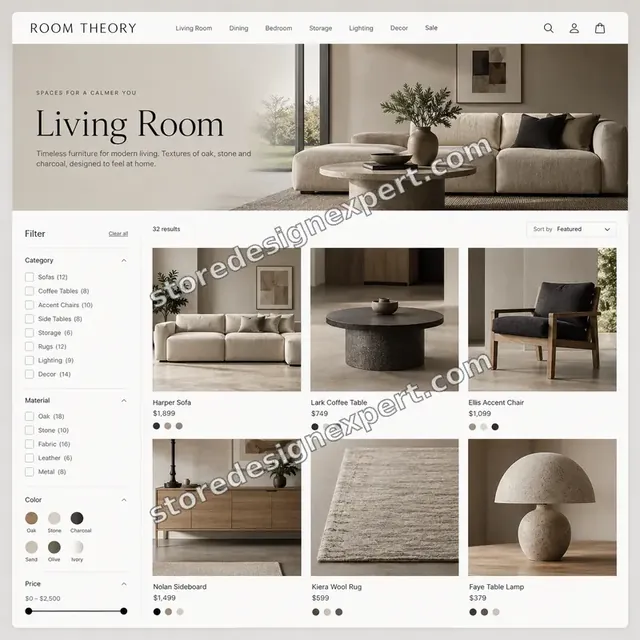
Room Theory Furniture Shopify Visual
Furniture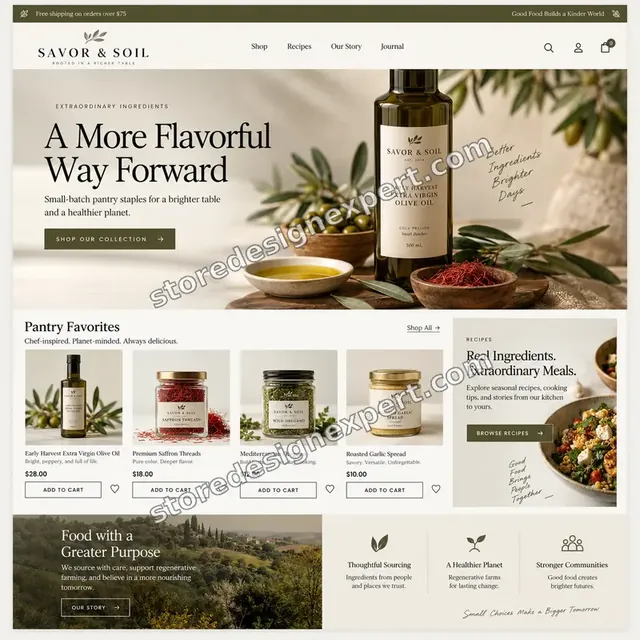
Savor & Soil Food Shopify Visual
Food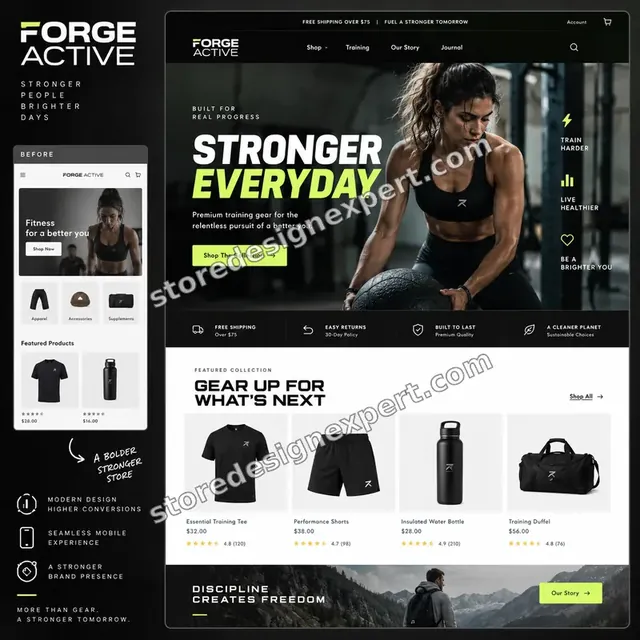
Forge Active Fitness Shopify Visual
Fitness
Nest Theory Home decor Shopify Visual
Home decorProcess and timeline
From First Call to Live Sync: Our Shopify ServiceM8 Integration Process
Six stages, in order. Nothing touches live data until you have seen it work on a copy, and your calculator choices decide how long each stage takes.
- 1
Brief and scope
First we find out what you sell, how your team uses ServiceM8 and which events count. A quick look at your orders and jobs tells us where to begin and what to avoid.
- 2
Access and connection
Access is narrow and approved by you, using an API key or an OAuth sign-in. A live read proves the connection works before any build begins.
- 3
Map and rule
Together we map customer name, address, job type and time slot, decide which system wins each clash and write down how blanks behave.
- 4
Build in a copy
We build against test data, not your live records, and show you the plan and a recorded run where it helps.
- 5
Test on real cases
We run an installation order, a rescheduled visit and a cancelled job, then refunds and edits, and verify each outcome against what the store shows.
- 6
Go live and hand over
When you say go, the flow goes live. We watch the first runs and leave you notes, a diagram and a recorded walkthrough.
Compare your options
Which Route Fits: DIY, Platform, Gig or Specialist Build?
Each route has a place. Read across the rows that matter to you and see which one you would trust with your orders.
| What matters | ServiceM8 app or DIY | Automation platform | Freelance gig | Store Design Expert |
|---|---|---|---|---|
| Every field mapped by design | Out-of-the-box fields | Yes, if you build it | Hit and miss | Yes |
| Retries cannot create duplicates | Easy to overlook | If you add it | Rarely | Yes |
| Failed runs raise an alert | No | If you add it | Seldom | Yes |
| Tested on refunds and edits | Rarely | When you test | Hit and miss | Yes |
| You see the cost before we begin | Just plan fees | Plan fees and your time | Yes | Yes |
| Documentation and video handover | No | No | Seldom | Yes |
| You own every account | Yes | Yes | Depends | Yes |
| Aftercare | Vendor support | Platform help desk | Often none | Included for a period |
Inside every project
How We Protect Your Orders and Customer Data
None of these costs extra. They are simply how we work.
Counts compared, not assumed
We check totals against the source after each load, so mismatches surface straight away.
Plain scope, two revision rounds
The price is visible before you pay, and in-scope changes get two structured rounds, so small tweaks never turn into hourly bills.
Narrow access, in your name
Access is as narrow as possible, granted through an API key or an OAuth sign-in, and every account remains yours.
Build in a copy, never live
The flow is built and tested against test data. Your live orders and jobs are untouched until you approve.
A written definition of done
We call it complete when an installation order, a rescheduled visit and a cancelled job work as agreed and the log proves it.
Nothing sent without approval
Emails, texts and posts that reach customers are approved by you before they are enabled.
Interactive price calculator
Price Your Shopify ServiceM8 Integration
Pick a package, answer three short questions and add any extras. Your total and delivery window update as you click, with nothing hidden until checkout.
Request a custom quote
Projects beyond these packages, such as bespoke objects, heavy history loads, multi-store designs or a custom API build, are scoped and quoted at a fixed price after a short call.
Request a QuoteChanged your mind? Choose Single Workflow, Core Workflows or Full Integration above to return to the instant calculator.
Packages and comparison
ServiceM8 Integration Package Comparison
Here is each package line by line. When you compare our fee with a marketplace listing for Shopify ServiceM8 integration, count how many of these checks the cheaper offer actually names.
| What is included | Single Workflow $390 | Core Workflows $790Recommended | Full Integration $1,490 |
|---|---|---|---|
| ServiceM8 authorised through an API key or an OAuth sign-in | Included | Included | Included |
| First trigger built: an installation order is paid | Included | Included | Included |
| Mapping for customer name, address and job type | Included | Included | Included |
| Duplicate protection on every write | Included | Included | Included |
| Test log and recorded handover | Included | Included | Included |
| A trigger for each: an installation order is paid, a delivery is booked, an order is cancelled | Not included | Included | Included |
| Time slot and custom fields mapped | Not included | Included | Included |
| Tag, country and value filters | Not included | Included | Included |
| Failed runs retried, then reported | Not included | Included | Included |
| Both-way sync with a winner for each field | Not included | Not included | Included |
| History load of previous jobs | Not included | Not included | Included |
| Two weeks of monitoring after go-live | Not included | Not included | Included |
| Team runbook in plain English | Not included | Not included | Included |
| Typical delivery | 3 to 5 days | 5 to 9 days | 8 to 14 days |
The calculator above is the source of truth for your final price and delivery estimate.
Why Store Design Expert
Why Owners Choose Our Shopify ServiceM8 Integration Over Doing It Alone
Templates cover the happy path. We cover the rest, and we put the result in writing.
Safety designed in
Every build includes retries, alerts, unique keys and narrow access; none are paid extras.
Notes a colleague can follow
The handover notes say what moves where and why each setting was chosen, so nobody has to guess later.
We live inside Shopify
Orders, refunds, edits and metafields are daily work for us. That is a different skill from knowing the menus of ServiceM8.
4.9+ from verified clients
You can read verified client reviews on this page before paying, so past results are visible.
A price you can plan around
You see the cost and extra days for each choice in the calculator. Any ServiceM8 subscription is billed by ServiceM8, so check what it charges today.
Experience since 2015
Over 450 Shopify stores since 2015 mean we have seen most of the odd cases that break integrations.
What we need to get started
What to Prepare Before We Start Your ServiceM8 Integration
Three things get the work moving: safe access, a few answers and a decision-maker. Here is the detail.
Approve a collaborator request
Already selling? Send the store address and accept the request we raise. You stay the owner, we see only what the role permits, and you can remove us at any time.
Starting from nothing? We build first
We can assemble the store in our own Shopify Partner account, connect ServiceM8 there, then hand the whole store over by ownership transfer. You pick a Shopify plan only at the end.
Or share a staff login
If it is simpler, a staff login will do. We prefer the collaborator route because it is revocable in one click and no password changes hands.
Your ServiceM8 access
Set up the account and invite us, or have us create it under your email. You stay the owner either way, and access runs through an API key or an OAuth sign-in.
Sample records
Share a few typical records from both tools, or point us to them. Real examples reveal how your data is really structured.
A decision-maker
We need one person to approve the plan and the test, plus a rule for what wins when ServiceM8 and Shopify clash.
We never need your owner password or payment details. Access is limited, logged and removable at any time.
Testimonials
What Store Owners Say After Working With Us
Read how past projects went before you pick a package.
Verified
Super helpful and patient. I am new to ecommerce and Store Design Expert talked me through the whole process and even fixed my payment bridging for me!
LR
Lois R.United Kingdom
Verified
Very satisfied with the work. Most importantly, Store Design Expert responded promptly to my questions and concerns. Thank you!
KB
Kyle B.United States
Verified
Outstanding work and outstanding customer service. Five stars! I will absolutely use Store Design Expert again for my next book.
KM
Katharine M.United States
Verified
Store Design Expert was great! They delivered exactly what I asked for and even offered helpful extra suggestions. Highly recommended.
PW
Paul W.United States
Verified
I request Store Design Expert every time I have a project. They are professional and give real attention to detail, which makes the work stand out.
LK
Laura K.United States
Verified
They kept communicating until the problem was fully resolved, and the result was great.
HJ
Henry J.United States
Verified
I am beyond satisfied! Store Design Expert went above and beyond on my project. Highly recommended!
MD
Michael D.United States
Verified
The experience was tailored to my brand and specifications to the letter. I love the result.
EP
Eric P.United States
Verified
They definitely get the job done. Very patient and understanding throughout the whole project.
BS
Brian S.United States
FAQ
Shopify ServiceM8 Integration FAQs
Answers on cost, timing, access, data and what to do when the connection misbehaves.
How much does Shopify ServiceM8 integration cost?
Single Workflow costs $390, Core Workflows $790 and Full Integration $1490. Order volume, data direction, existing ServiceM8 data and add-ons change the total, and the calculator shows it before you pay. Most projects land between about $390 and $2090, with delivery from 3 to 14 working days.
How long does the ServiceM8 integration take?
Single Workflow takes 3 to 5 working days, Core Workflows 5 to 9 and Full Integration 8 to 14. The usual variables are how much history you want loaded and how quickly you approve the test results. The Sooner and Fastest options shorten the schedule when a launch date is fixed.
Does ServiceM8 have a Shopify app?
We found none.
Which tools connect them?
Zapier, Zoho Flow, Workato and MindCloud. If you typed "servicem8 jobs shopify orders zapier workato", the answer is the same.
Is it two-way?
Zapier says mainly one-way. Queries such as "shopify to servicem8 sync" describe the same work.
Can job updates trigger actions?
Zoho Flow and Workato list them. You may also see it searched as "connect shopify and servicem8"; this page covers that too.
How many actions exist?
MindCloud lists about 42. Related searches such as "servicem8 shopify zapier", this is the page for it.
What does it cost?
Fixed price from $390 plus tool fees. People also search for "servicem8 shopify make.com"; the same build answers that too.
Can you build it?
Yes. If you typed "servicem8 shopify n8n", the answer is the same.
Ready when you are
Get Your Shopify ServiceM8 Integration Done
Select a package, watch the fixed price settle and order a Shopify ServiceM8 integration build from a team that has launched 450+ Shopify stores. The connection is tested on real cases before you are asked to approve anything.
- Secure checkout
- Two revision rounds
- Test log and walkthrough included